Featured

What is Athletic Training

The definition and purpose of the career of Athletic Training

You know the people that run out onto the field when athletes go down during a game? Those people are called athletic trainers. Athletic trainers are trained medical professionals who provide services in primary care, injury and illness prevention, wellness promotion and education, emergent care, examination and clinical diagnosis, therapeutic intervention and rehabilitation of injuries (NATA).

Most athletic trainers work with sport athletes on a daily basis at different levels of competition. Daily responsibilities include tending to each of the athletes on the team you are training for using different techniques such as: massage, taping, ice therapy, heat therapy, and rehabilitation exercises.

Athletic trainers are important because they prevent athletes from getting injured, help them rehabilitate injuries, help them perform at their peak, and keep them safe and healthy. Daily trips to an athletic trainer may seem insufficient, but those visits add up to create a big impact.
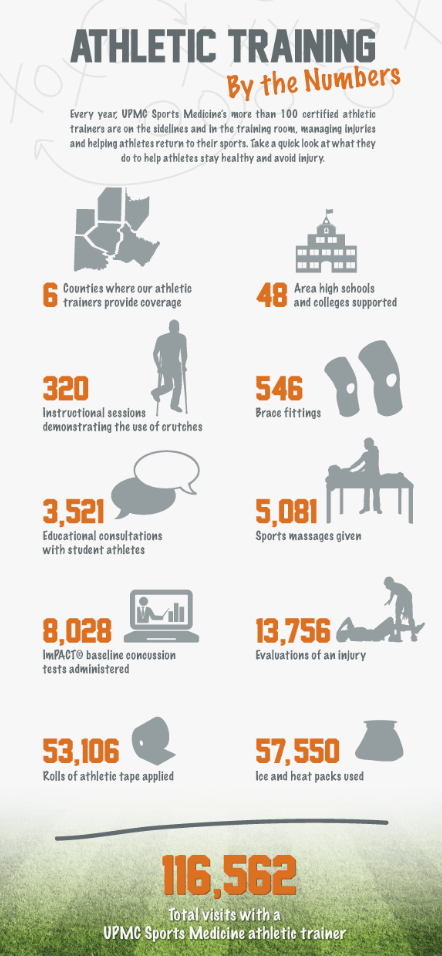
Infographic Provided by UPMC Sports Medicine
umpc.com/spotsmedicine

References

  • “Athletic Training”. National Athletic Training Association. National Athletic Training Association (NATA).
  • “Athletic Training: By the Numbers”. UPMC Sports Medicine. upmc.com/sportsmedicine

How to Become an Athletic Trainer in 11 Steps

Becoming an athletic trainer takes time, dedication, initiative, and planning. Below are 11 simple steps to become an athletic trainer. These are the 11 things you should be able to tick off as you start your journey!

  1. Go to college.
  2. Major in Athletic training, exercise science, biomedical science, kinesiology or similar along these majors.
  3. Do well in your classes.
  4. Find a shadowing opportunity with an athletic trainer to gain knowledge and experience.
  5. Get letters of reference from your professors and the athletic trainer you shadowed.
    1. OPTIONAL: Take the GRE test and do relatively well. This step depends on what Master’s Program you would like to apply to.
  6. Apply to a Master’s Program(s) of your choosing. Specifically one that is focused on athletic training, or one where you can specialize in athletic training.
  7. Get into a Master’s Program(s) of your choosing.
  8. Take the necessary classes to learn the techniques of athletic training.
  9. Take the BOC exam to become a certified athletic trainer.
  10. Graduate your Master’s Program.
  11. Search the job market for open opportunities and gain experience working with several different types of settings.

There you go! A simple set of instructions to become an athletic trainer!

A typical Day as an Athletic Trainer

What does a typical day as an athletic trainer look like? Sarah is an assistant athletic trainer for Libertyville High School.

The typical hours of an athletic trainer depends on the sports season, as well as events of the day itself. Sarah gets to work right before school ends on the weekdays and in the morning on the weekends. Some days she leaves around 6:30pm and other days she leaves around 10pm. She attends each game for each sport and makes sure that her athletes are well prepared for their games.

If her high school is hosting the game, she makes sure that there is water, ice chests, and first aid kits ready to go. Right before each game, she preps her athletes by taping or bracing injuries, guiding rehab treatments, and even performing injury evaluations. Most of her days are spent on her feet making sure every athlete is ready to perform that day or night.

When an athlete is injured, Sarah’s job is to evaluate the injury, create a treatment plan, and update the coaches and parents. Sarah emphasizes how important communication is between the athletes, parents, coaches, and doctors. Injury evaluation reports and injury progression reports are typically given to each person involved to keep them updated.

Overall, athletic trainers’ day changes all the time, as Sarah says, “my day as an AT is always different, which is one reason why I love my job” (Athletico 2017).

References:

  • “A Day in the Life of an Athletic Trainer”. Athletico Physical Therapy, 10 March 2017.

Create your own website, free on WordPress.com.Create your own website.
Start free